
It’s 2 AM. You’re squinting at your phone, one hand patting your baby’s back in that rhythmic bounce you’ve perfected over the past three months. You just googled “3 month old sleep schedule” hoping someone — anyone — will tell you whether what’s happening in your house is normal.
I’ve been right where you are. Twice.
Here’s what I wish someone had told me back then: there IS a general framework for how much sleep your 3–4 month old needs, and it genuinely helps to know the benchmarks. But the gap between what the sleep charts promise and what actually happens at 3 AM in your nursery? That’s the part nobody writes about. This guide covers both — the evidence-based recommendations AND the real-world adjustments that made those recommendations actually work in my home. Because a 3 month old sleep schedule that only works on paper isn’t a schedule at all.
How Much Sleep Does a 3–4 Month Old Actually Need?
Let’s start with the numbers. The American Academy of Pediatrics recommends that infants aged 0–4 months get 12–16 hours of total sleep per 24-hour period, including naps. Most sleep experts break that down into roughly 10–12 hours overnight (with feeds) and 3–5 hours of daytime sleep spread across 3–5 naps.
That range is wide on purpose. Your baby isn’t a robot, and the difference between a 3-month-old and a nearly-4-month-old is enormous in sleep terms.
Here’s a general breakdown:
| Age | Total Sleep (24 hrs) | Nighttime Sleep | Daytime Naps | Number of Naps | Wake Windows |
|---|---|---|---|---|---|
| 3 months | 14–17 hours | 9–11 hours (with feeds) | 4–5 hours | 4–5 naps | 60–90 minutes |
| 3.5 months | 14–16 hours | 10–11 hours (with feeds) | 3.5–4.5 hours | 4 naps | 75–100 minutes |
| 4 months | 13–16 hours | 10–12 hours (with feeds) | 3–4 hours | 3–4 naps | 90–120 minutes |
When my daughter was 3 months old, I printed out a color-coded sleep chart from a popular baby app and taped it to the fridge like a battle plan. She was “supposed” to nap four times a day for 45 minutes each. She napped four times, sure — but each nap lasted exactly 27 minutes. I timed them obsessively. I thought something was wrong. It took me three weeks of anxiety before our pediatrician told me that 30-minute naps are biologically normal at this age and she’d consolidate later. She did, around 4.5 months. The lesson: the chart is a compass, not a GPS.
Understanding Wake Windows at 3–4 Months
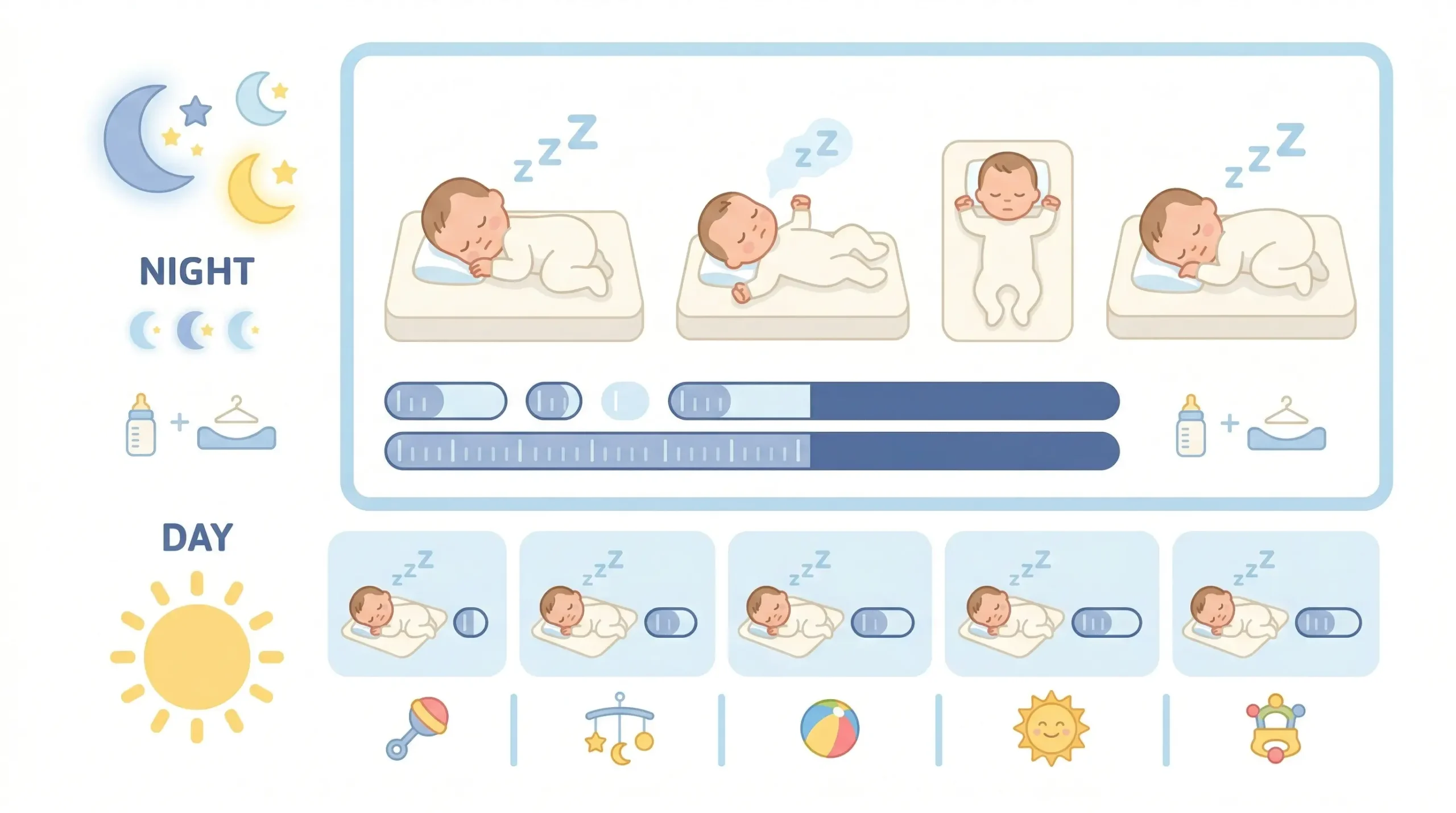
Wake windows are the single most useful concept I learned as a new parent. Forget clock-based schedules at this age. Your baby can’t read a clock, and their internal rhythm shifts week by week. Instead, focus on how long they’ve been awake since their last sleep.
At 3 months, most babies can handle about 60–90 minutes of awake time before they’re ready for another nap. By 4 months, that stretches to 90–120 minutes. These windows tend to get slightly longer as the day goes on — a morning wake window might be just 60 minutes, while the last one before bed could push to nearly two hours.
How to Tell Your Baby’s Wake Window Is Closing
Watch your baby, not the clock. Early tired cues include staring off into space, turning away from stimulation, and getting quieter. The “obvious” signs — eye rubbing, yawning, fussing — often mean you’ve already missed the window by 10–15 minutes.
With my son, I completely missed his tired cues for the first two months because he didn’t yawn or rub his eyes. His signal was tugging his left ear. I only figured it out at around 3.5 months when my mother-in-law pointed it out during a visit. She watched him for twenty minutes and said, “He does that ear thing right before he melts down every time.” She was right. Once I started watching for the ear tug instead of waiting for yawns, I could get him down within five minutes instead of battling a screaming, overtired baby for forty. Every baby has their own “tell” — your job is to find it.

A Realistic 3 Month Old Sleep Schedule (Sample Day)
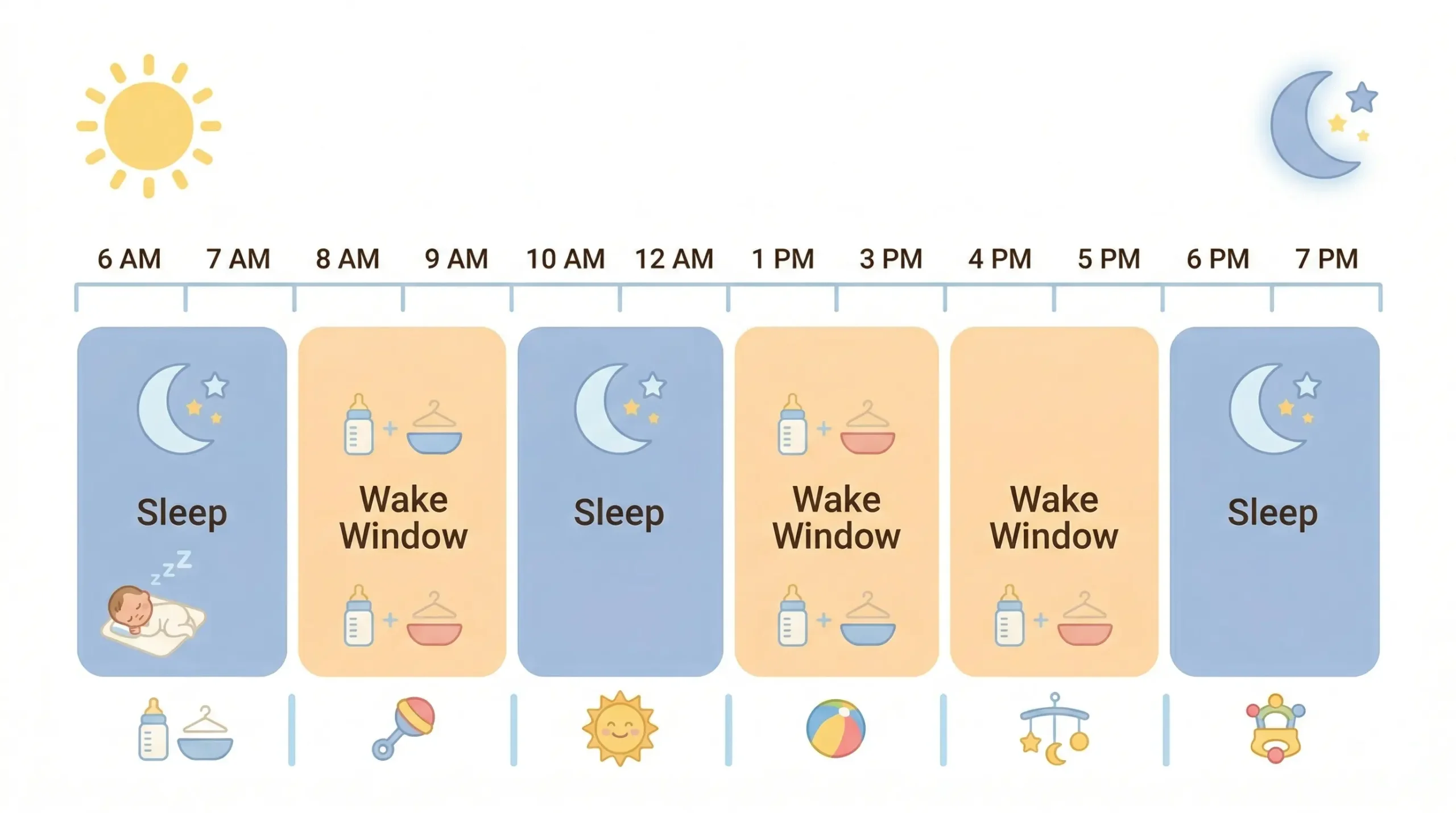
I want to be upfront: sample schedules are guidelines, not rules. Your baby hasn’t read this blog post. But seeing a rough framework can help you spot patterns in your own day, so here’s what a typical day looked like for us at 3 months — not what the textbook said, but what actually happened.
| Time | Activity |
|---|---|
| 6:30 AM | Wake + feed |
| 7:45 AM | Nap 1 (30–45 min) |
| 8:15–8:30 AM | Wake + play |
| 9:45 AM | Nap 2 (30 min–1.5 hrs) |
| 11:00 AM | Wake + feed |
| 12:30 PM | Nap 3 (30 min–1.5 hrs) |
| 2:00 PM | Wake + play |
| 3:30 PM | Nap 4 (30–40 min) |
| 4:00 PM | Wake + feed |
| 5:15 PM | Catnap 5 (20–30 min, if needed) |
| 6:30 PM | Bedtime routine begins |
| 7:00 PM | Asleep for the night |
| Night | 2–3 feeds overnight |
A few things to notice: nap lengths are wildly inconsistent, there are potentially five naps, and “bedtime” doesn’t mean “sleeps through the night.” That’s all normal at 3 months.
The 4 Month Sleep Regression: What’s Really Going On
If your baby was sleeping in decent stretches and suddenly started waking every 45 minutes to 2 hours, congratulations — you’ve probably hit the 4 month sleep regression. I say “congratulations” only half-sarcastically, because this regression is actually a sign of healthy neurological development.
Here’s what’s happening: around 3.5–4 months, your baby’s sleep architecture permanently changes. They shift from the two-stage sleep cycle of a newborn (active sleep and quiet sleep) to the four-stage adult-like cycle. The NHS notes that this period often brings more frequent night waking, and it’s one of the most common reasons parents seek help with infant sleep.
This isn’t a phase your baby “goes back” from. Their sleep has matured. The good news? Once they learn to connect sleep cycles — which can take two to six weeks — things typically improve significantly.
Signs It’s the 4 Month Sleep Regression
Your baby might be going through it if you’re seeing:
- Increased night waking — especially every 45 minutes to an hour, matching one sleep cycle
- Shorter naps than before
- More fussiness at bedtime
- Increased hunger from the developmental energy demands
- A baby who previously self-settled but now needs more help falling asleep
I want to be honest about this one, because the 4 month sleep regression nearly broke me with my daughter. She went from two night feeds to waking five or six times between midnight and 6 AM — for three solid weeks. I was so sleep-deprived I put the TV remote in the fridge twice. I tried everything the internet told me: white noise louder, white noise softer, swaddle tighter, drop the swaddle, earlier bedtime, later bedtime. Nothing “fixed” it because it wasn’t broken — her brain was rewiring itself. What eventually helped was just keeping her bedtime consistent at 7 PM, responding to her when she woke, and giving it time. By week four, she was back to two night feeds. Not perfect. But survivable. The takeaway: you can’t rush brain development, and “wait it out while keeping things consistent” is sometimes the only real answer.

How to Handle Short Naps at 3–4 Months
Thirty-minute naps are the hallmark of this age, and they’re the thing most likely to make you question everything. Your baby falls asleep beautifully, you tiptoe away, you sit down with your cold coffee — and twenty-eight minutes later, they’re up.
This is biologically normal. At 3–4 months, babies often can’t connect sleep cycles during the day. One daytime sleep cycle lasts roughly 30–45 minutes. Some babies figure out how to bridge the gap between cycles early. Most don’t until closer to 5–6 months.
What You Can Actually Do About Short Naps
There’s no magic trick, but a few things can help. First, give your baby 5–10 minutes before rushing in when they wake — sometimes they’ll fuss briefly and fall back asleep. Second, keep the room dark. I mean cave-dark. Blackout curtains made a noticeable difference for us. Third, try the “wake-to-sleep” method for chronically short naps: gently rouse your baby at the 20-minute mark (just a light touch or shifting them slightly) to reset the sleep cycle. It sounds counterintuitive, but research on infant sleep cycle architecture supports the principle that gentle disruption at the right moment can help babies transition between sleep stages, and many parents report it extends naps.
My son was the king of the 28-minute nap from 2.5 to nearly 5 months. I tracked his naps on a Huckleberry app for six straight weeks — 147 naps, and the average was 31 minutes. I tried everything: a warmer room (he ran hot and hated it), a later wake window (made him overtired), a pacifier (he spit it out immediately every time). What finally made a dent? Contact naps in a carrier for at least one nap per day. It didn’t “fix” the crib naps, but it guaranteed he got one long restorative nap, which made the rest of the day smoother for both of us. Sometimes the best strategy isn’t solving the problem — it’s working around it.
Creating a Bedtime Routine at 3–4 Months
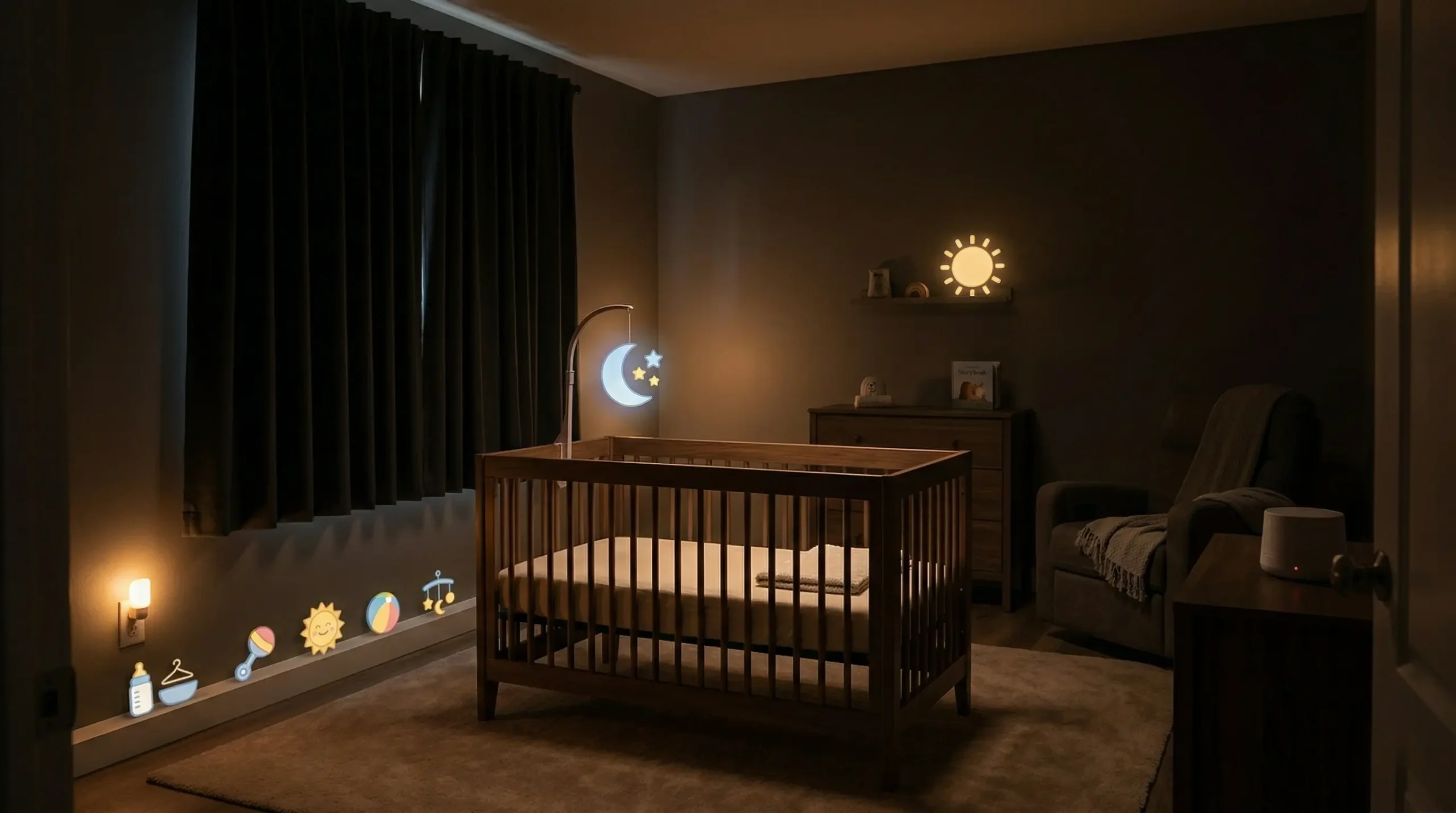
If you haven’t started a consistent bedtime routine yet, 3–4 months is a great time to begin. You’re not sleep training — you’re just building associations that signal to your baby’s brain that sleep is coming.
Keep it simple. A good bedtime routine at this age is 20–30 minutes, and the order matters more than the specific activities. What works for most families is some version of: bath (not every night — every other night is fine for baby skin), diaper and pajamas, feeding, a short book or song, then into the sleep space drowsy.
The key word there is “consistent.” Do the same steps in the same order in the same place. Babies at this age are beginning to recognize patterns, and research on infant sleep interventions shows that repetition is how their brains build the “it’s time to sleep” association.
When Should a 3–4 Month Old Go to Bed?
Most babies this age do best with a bedtime between 6:30 and 8:00 PM. Earlier within that range tends to work better for babies who nap poorly during the day, because it prevents the overtired spiral.
We landed on 7:15 PM for both kids, but getting there was trial and error with my daughter. At 3 months, we were putting her down at 8:30 because that was “our” schedule — we wanted to eat dinner together first. She screamed for 30–45 minutes every night before falling asleep. When I moved bedtime to 7:00 PM out of desperation one Tuesday, she was asleep within eight minutes. Eight. I actually checked the monitor three times because I thought something was wrong. That one-hour shift was the single biggest sleep improvement we made in her first year.

Safe Sleep Reminders for 3–4 Month Olds
This is the age when many babies start attempting to roll, which means you need to think about transitioning out of the swaddle if you haven’t already. The AAP’s safe sleep guidelines are clear: once your baby shows signs of rolling, arms need to be free.
Other safe sleep basics that still apply: firm, flat sleep surface with nothing else in the crib (no blankets, no loveys, no bumpers), room-sharing without bed-sharing for at least the first six months, and always placing your baby on their back to start sleep.
If your baby rolls onto their tummy during sleep and can roll both ways, it’s generally okay to leave them. If they can only roll front-to-back but not back-to-front, you’ll want to reposition them.
Frequently Asked Questions
Most 3-month-olds take 4–5 naps per day. By closer to 4 months, many babies naturally drop to 3–4 naps as their wake windows stretch. Don’t force a specific number — follow your baby’s cues and wake windows instead.
Yes. Short naps are developmentally normal at this age because babies haven’t yet learned to connect sleep cycles during the day. Most babies start consolidating naps into longer stretches between 5–6 months.
At 3 months, aim for 60–90 minutes of awake time between naps. The first wake window of the day is usually the shortest (closer to 60 minutes), and the last is the longest (closer to 90 minutes). By 4 months, these stretch to 90–120 minutes.
The telltale sign is a sudden increase in night waking — often every 1–2 hours — in a baby who previously slept in longer stretches. You might also see shorter naps, more bedtime resistance, and increased fussiness. It typically starts between 3.5 and 4.5 months and lasts 2–6 weeks.
Most pediatricians and sleep experts recommend waiting until at least 4–6 months for formal sleep training methods. At 3 months, you can start building healthy sleep habits — consistent bedtime routines, practicing putting baby down drowsy but awake, and following age-appropriate wake windows — without any cry-based method.
You’re doing a harder job than most people realize. The 3–4 month stage feels chaotic because it IS chaotic — your baby is undergoing a massive neurological shift, and you’re both figuring it out in real time. Focus on wake windows over rigid schedules, keep bedtime consistent, and give yourself permission to use whatever safe sleep strategy gets your family the most rest right now. Perfection isn’t the goal. Survival — with a little more sleep each week — is.
Your next step: pick one thing from this guide to try tonight. Just one. Whether it’s adjusting bedtime earlier, watching for that first subtle tired cue, or committing to a simple three-step bedtime routine — small changes compound fast at this age.
This article is for informational purposes only and is not intended to replace professional medical advice, diagnosis, or treatment. If you have any concerns about your baby’s sleep or health, consult your pediatrician. This content is based on AAP and NSF guidelines.