
The first time I timed a baby’s bedtime routine, it took 55 minutes. There was a bath, a massage, two books, three songs, a feeding, more rocking, and by the end the baby was so stimulated she was wide awake. The routine was working against sleep, not toward it.
A baby bedtime routine does not need to be long or Instagram-worthy. It needs to be short, consistent, and boring enough that your baby’s brain gets the message: sleep is next.
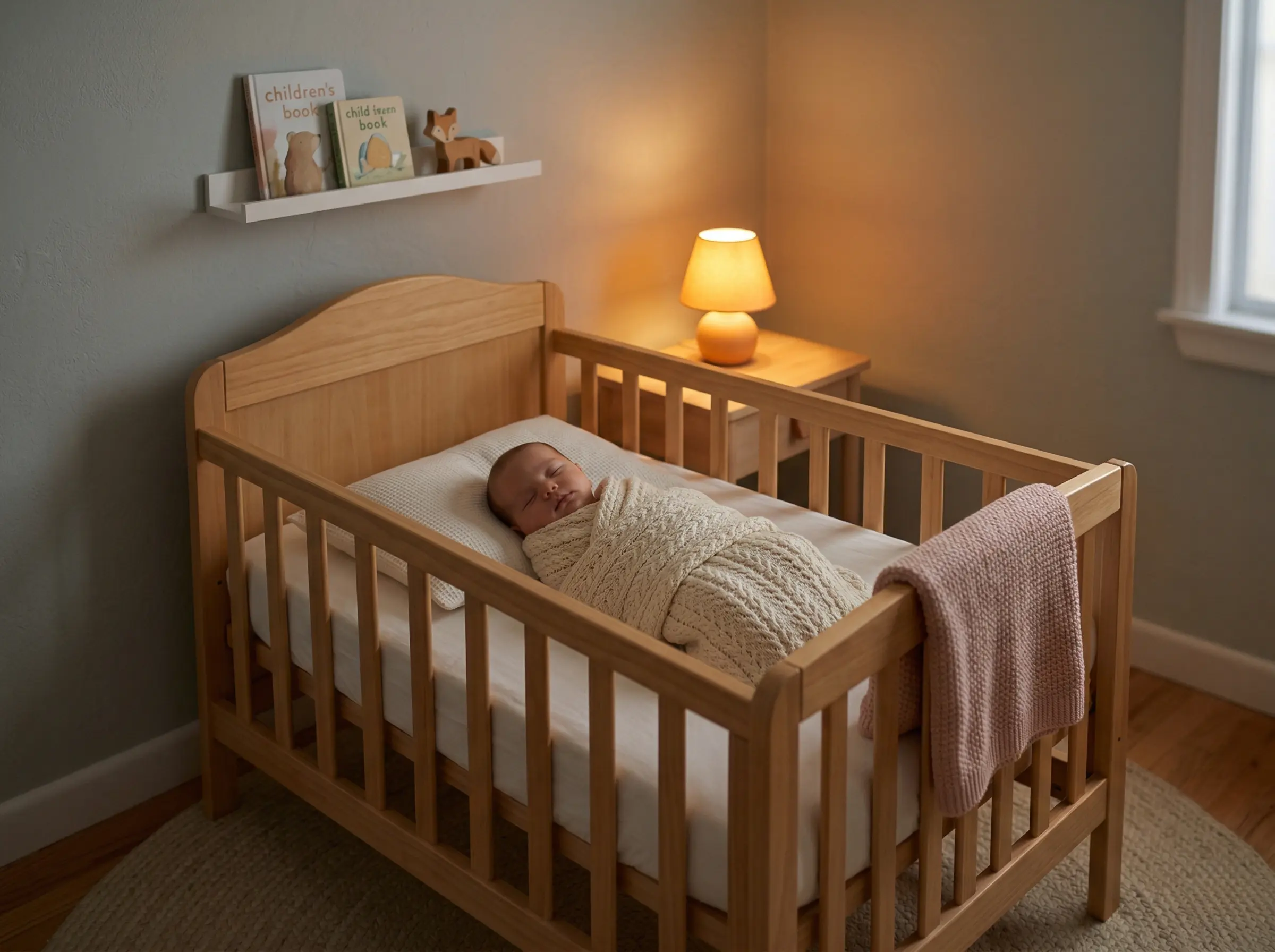
Why Bedtime Routines Work
Babies cannot read clocks. They rely on environmental cues and patterns to anticipate what comes next. A bedtime routine creates a predictable sequence that triggers the brain’s wind-down response. Research published in the journal Sleep found that a consistent bedtime routine reduced night waking, improved sleep onset latency, and even correlated with better maternal mood.
The key word is consistent. Doing the same steps in the same order in the same place every night creates a Pavlovian association. After a week or two, simply starting the routine begins the physiological process of falling asleep.
For the first three weeks, I tried to make every bedtime special — different lullabies, switching between rocking and bouncing, sometimes reading two books instead of one. My daughter fought sleep harder each night. Then I forced myself to do the exact same five steps in the exact same order for seven nights straight. By night four, she was yawning before I even picked up the book. Nothing about the routine was magical. The repetition was the magic.
When to Start a Bedtime Routine
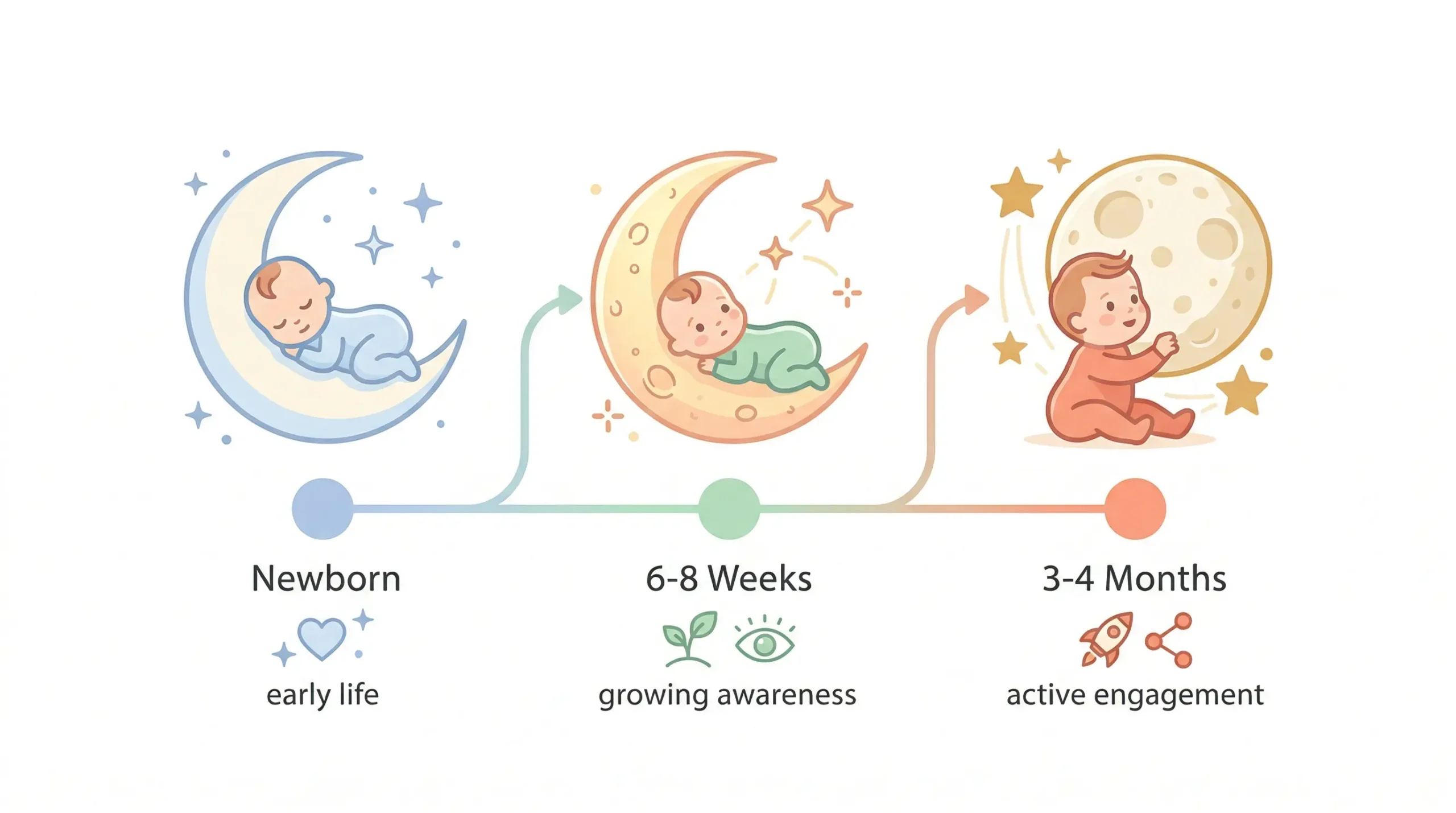
You can start a simplified version from day one — even a 5-minute sequence of dimming lights, changing into pajamas, and a short feeding counts. A more structured routine makes the biggest difference starting around 6 to 8 weeks, when the circadian rhythm begins forming.
By 3 to 4 months, a consistent routine is strongly recommended. This is when babies begin distinguishing day from night, and the routine anchors that distinction.
The Ideal Bedtime Routine (Step-by-Step)
The total routine should take 20 to 30 minutes. Longer than 30 minutes loses effectiveness because the baby may cycle past drowsiness back into alertness.
Step 1 — Dim the Lights (2 minutes)
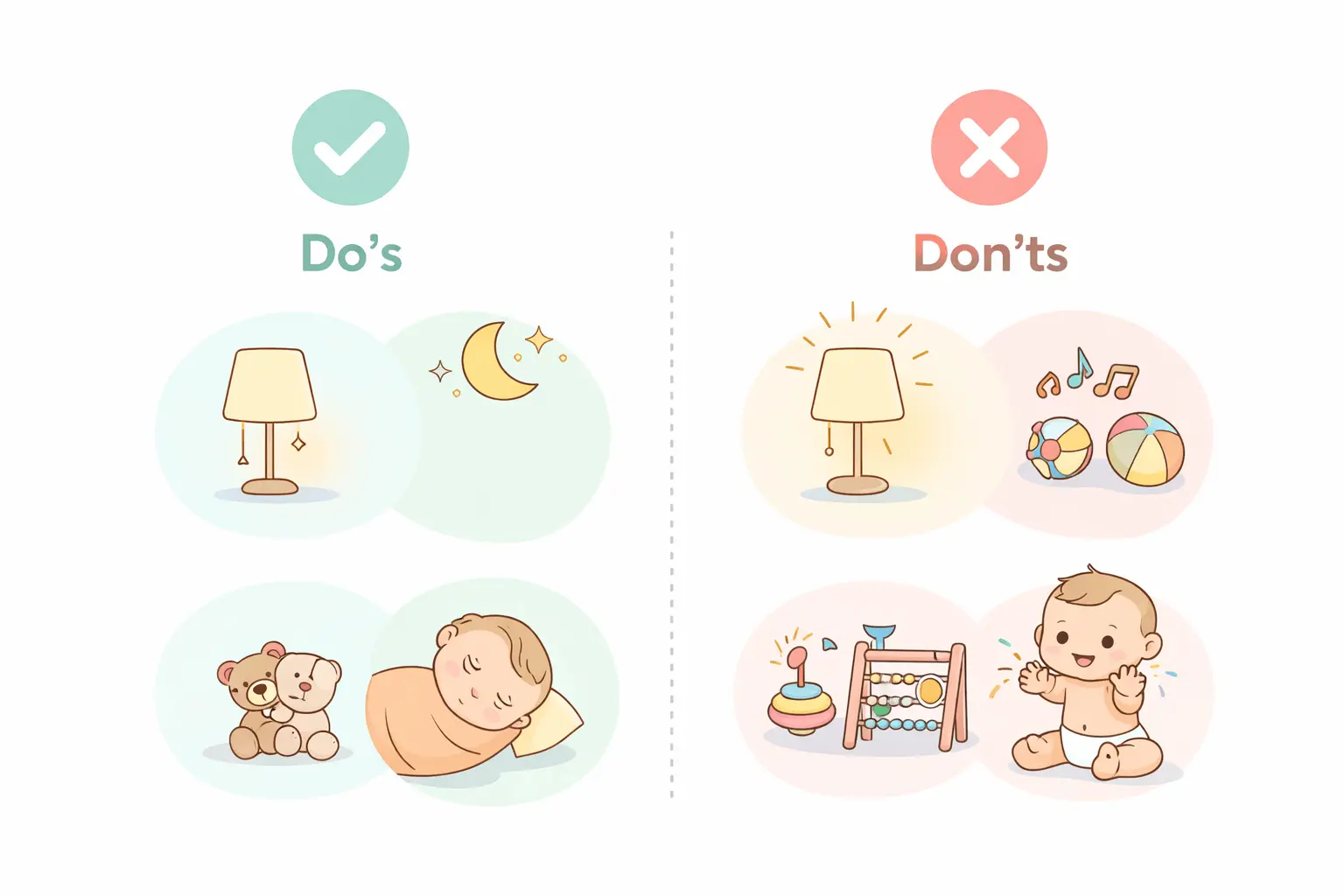
About 30 minutes before starting the routine, dim the lights throughout the area where you and your baby spend evening time. This signals melatonin production. Avoid screens and bright overhead lights.
Step 2 — Bath Time (Optional, 5–10 minutes)
A bath is not required every night. If you include it, keep water warm (not hot), and keep it calm — no splashing games. The mild temperature drop after getting out of the bath naturally triggers drowsiness. If you skip the bath, a warm washcloth wipe-down of hands and face works as a substitute sensory cue.
We used to bathe our son every single evening because every sleep guide seemed to insist on it. By month three his skin was so dry the pediatrician told us to cut back to every other day. On non-bath nights, I wipe his hands and face with a warm cloth and put on his pajamas. The routine works exactly the same. If anything, he falls asleep faster on non-bath nights because the whole process is shorter.
Step 3 — Pajamas and Diaper (3–5 minutes)
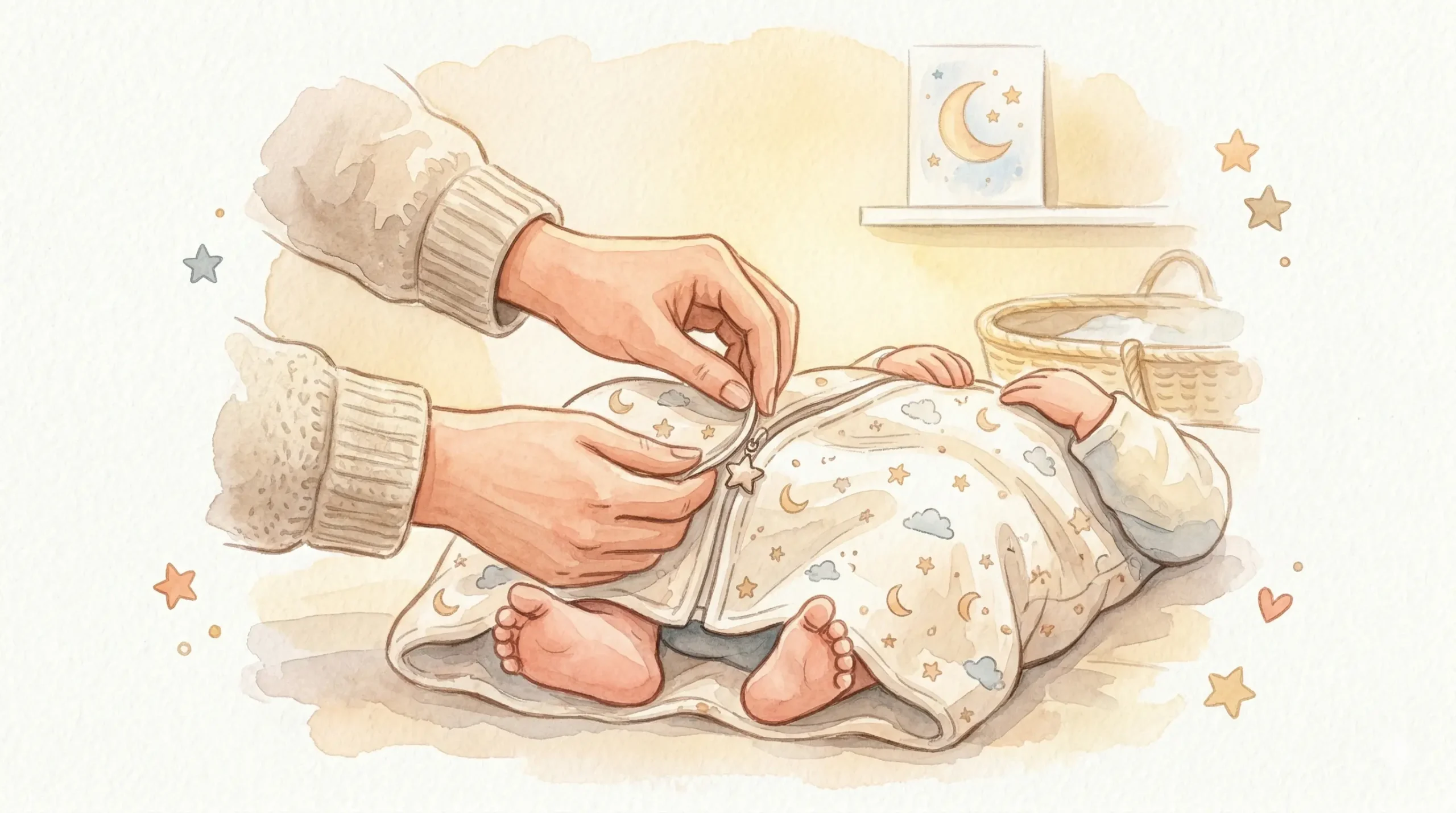
Fresh diaper, sleep sack or pajamas. Some families add a brief infant massage here — gentle strokes on arms and legs. Keep it under 3 minutes. The physical touch and the act of changing clothes serve as transition signals.
Step 4 — Feeding (10–15 minutes)
Feed in the dimly lit nursery. Whether breast or bottle, try to keep the baby from falling fully asleep during the feed. If they drift off, a gentle burp or slightly shifting their position is usually enough to bring them back to a drowsy state.
If you are working to separate the feed-sleep association, you can move the feeding to the beginning of the routine (before the bath) instead. This is especially useful for babies older than 4 months.
Until my daughter was about 5 months old, nursing was the last step before the crib. She would not go down without it. When I moved the feed to before the bath — so the order became feed, bath, pajamas, book, crib — she fussed for three nights and then adjusted. The real test was when my partner did bedtime alone for the first time. She went down without nursing at all. Breaking that feed-to-sleep link was the single biggest unlock for us.
Step 5 — Book or Song (3–5 minutes)
One short book or one quiet song. Not three. Not five. The point is a final calming cue, not entertainment. Board books with simple images work best. Use a soft, monotone voice. The same book every night is perfectly fine — repetition is the point.
Step 6 — Into the Crib (1 minute)
Place your baby in the crib drowsy but awake. Say a consistent phrase — something like “Goodnight, sleep well” — and leave the room. If your baby is not yet able to fall asleep independently, you can stay briefly with a hand on their chest or use a gradual withdrawal method.

Bedtime Routine Quick-Reference
| Step | What to Do | Duration | Key Tip |
|---|---|---|---|
| 1. Dim Lights | Lower lights in living area | 2 min | Start 30 min before routine |
| 2. Bath (optional) | Warm, calm bath — no splash games | 5–10 min | Warm washcloth on skip nights |
| 3. Pajamas & Diaper | Fresh diaper, sleep sack, brief massage | 3–5 min | Keep massage under 3 min |
| 4. Feeding | Nurse or bottle in dim room | 10–15 min | Keep baby from falling fully asleep |
| 5. Book or Song | One book or one song, soft voice | 3–5 min | Same book every night is fine |
| 6. Into Crib | Place down drowsy but awake, say goodnight | 1 min | Use the same phrase each night |
How Long Should the Routine Take?
If your routine consistently runs over 30 minutes, cut something. The most common culprit is too many books or an extended rocking session that has become a sleep crutch.
Common Bedtime Routine Mistakes
Starting too late. If your baby is already overtired, the routine is fighting an uphill battle. Begin the routine within the wake window, not after it has been exceeded.
Varying the steps. Doing bath-book-song on Monday but song-feed-rocking on Tuesday confuses the pattern. Pick a sequence and stick with it for at least 2 weeks before evaluating.
Too much stimulation. Tickle games, loud music, bright bathroom lights, or interactive toys during the routine all work against the wind-down goal. Save stimulation for wake windows.
Skipping it on rough nights. The nights when the routine feels pointless are the nights it matters most. Consistency during difficult periods is what eventually builds the association.
During a brutal teething stretch around 8 months, my son screamed through every step of the routine for five nights straight. I nearly gave up and just rocked him to sleep. I kept going — same steps, same order, slightly faster. By night six he settled back into the pattern on his own. If I had abandoned the routine, I am convinced we would have spent weeks rebuilding it.
Adjusting the Routine as Your Baby Grows
The core structure stays the same, but the content shifts. A 3-month-old gets a quiet feeding and is placed in the crib. A 15-month-old might help choose a book and “tuck in” a stuffed animal (after 12 months, a single small lovey is generally considered safe by the AAP). An 18-month-old might say goodnight to objects in the room as a stalling prevention tactic — you control the list.
The routine grows with your child, but the underlying principle never changes: same steps, same order, same calm environment.
At 3 months our routine was feed, swaddle, white noise, crib — maybe 15 minutes total. By 12 months it had become dim lights, bath every other night, pajamas, one board book, song, crib. At 18 months my daughter started demanding “one more book” every night. I added a rule: she picks one book, then we say goodnight to five things in her room — the lamp, the bear, the curtain, the crib, and the door. She loves the ritual and it actually prevents the stalling because she feels like she got something extra. The structure held; only the details changed.
Start Tonight — It Compounds Over Time
Your bedtime routine is the single highest-impact sleep intervention available. It costs nothing, takes 20 minutes, and compounds over time. Get this right, and every other sleep strategy becomes easier.
Frequently Asked Questions
A newborn bedtime routine can be as simple as dimming the lights, changing into a fresh diaper and sleepwear, feeding, and placing the baby down. Keep it under 15 minutes. The goal at this stage is introducing the concept of a pre-sleep pattern, not perfecting it.
Yes, but make changes gradually. Swap one step at a time and give the new version at least a week before judging it. Avoid changing the entire sequence at once — that resets the association your baby has built.
No. A bath is helpful because the post-bath temperature drop promotes drowsiness, but it is not essential. Many families skip the bath on most nights and use a warm washcloth instead. The routine works as long as the other steps are consistent.
Some fussing is normal, especially during the first week of a new routine or during developmental leaps. Check for obvious causes — hunger, dirty diaper, overtiredness. If the crying is intense and persistent, the routine timing may need adjusting. Starting earlier within the wake window often helps.
A fixed clock time becomes more relevant around 3 to 4 months, when the circadian rhythm matures. Before that, focus on consistent wake windows rather than a fixed bedtime. By 6 months, most babies benefit from a predictable bedtime within a 30-minute window each night.
This article is for informational purposes only and is not intended to replace professional medical advice, diagnosis, or treatment. If you have any concerns about your baby’s sleep or health, consult your pediatrician. This content is based on AAP and NSF guidelines.