
There is no such thing as a strict newborn sleep schedule. I want to be upfront about that because the phrase “newborn sleep schedule” might suggest a tidy timetable with fixed nap times and a predictable bedtime. That is not how the first 8 weeks work.
To better understand the philosophy behind our approach to baby sleep, you can visit our About Mupadi page.
What you can do during the newborn phase is understand the patterns, set up healthy foundations, and gently guide your baby toward distinguishing day from night. That is exactly what this guide covers.
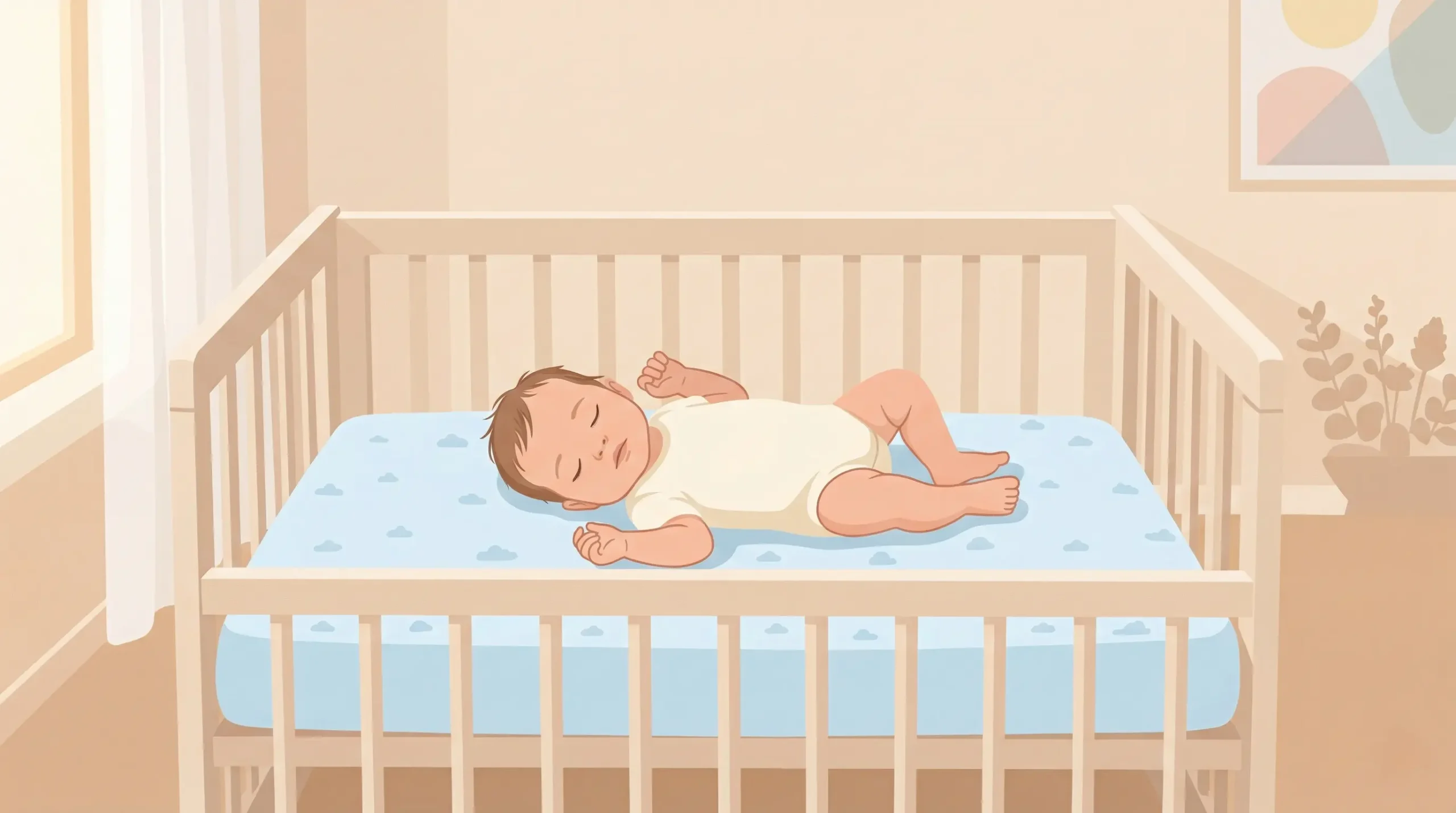
What Newborn Sleep Actually Looks Like
Newborns sleep in bursts. They might sleep 45 minutes, then be awake for 40 minutes, then sleep 3 hours, then be awake for an hour. There is no consistent pattern in the first few weeks — and there is not supposed to be. The circadian rhythm — the internal body clock that differentiates day from night — does not start developing until around 6 to 8 weeks.
During the first two weeks, many newborns are extremely sleepy and need to be woken for feeds every 2 to 3 hours. By weeks 3 and 4, most babies become more alert, and this is when many parents notice sleep becoming “more difficult.” It was not better before — the baby was just sleepier from birth.
My son slept like a dream for the first 14 days. I actually thought we got lucky with an easy baby. Then week 3 hit. He went from sleeping 4-hour stretches to waking every 90 minutes, fussing during feeds, and refusing to be put down. I panicked and called the pediatrician — turns out this is textbook newborn behavior. The sleepy phase ends, the alert phase begins, and nobody warns you about the transition. Once I stopped expecting those early long stretches to come back, the frustration dropped significantly.
How Much Do Newborns Sleep?
Newborns sleep 14 to 17 hours in a 24-hour period. This breaks down roughly as 8 to 9 hours of nighttime sleep (in multiple stretches) and 6 to 8 hours of daytime sleep spread across 4 to 6 naps.
No two days will look the same. I logged my son’s sleep for the entire first month and the daily total ranged from 13.5 hours to 18 hours. Both extremes were normal.
I used a tracking app for 31 straight days. Some days my son hit 17 hours of sleep, other days barely 14. I would spiral on the low days, convinced something was wrong. My pediatrician told me to look at 3-day averages instead of single days. That one shift in perspective made the tracking useful instead of anxiety-inducing. If you track, zoom out — one bad day does not mean something is broken.
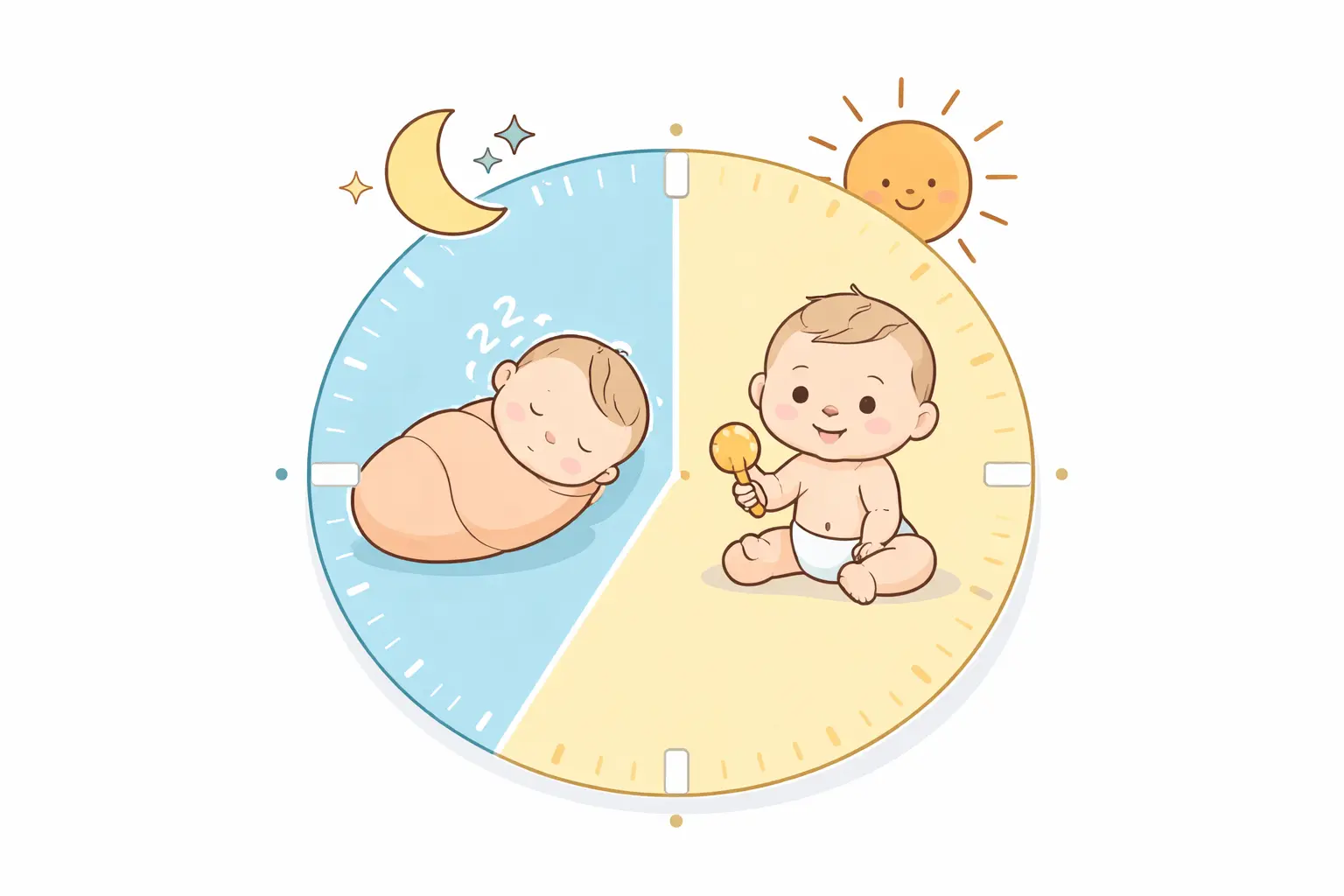
Sample Newborn Sleep Schedule
This is a sample, not a prescription. Your baby will not follow this exactly, and that is normal. Use it as a loose framework.
The pattern is eat–wake–sleep repeated throughout the day. Wake windows are extremely short — 45 to 60 minutes at most. By the end of week 6, some babies stretch their longest nighttime sleep to 4 or 5 hours. That is a milestone worth celebrating.
| Time | Activity | Notes |
|---|---|---|
| 7:00 AM | Wake + Feed | Open curtains, let in natural light |
| 7:45 AM | Nap 1 | ~45–60 min wake window, watch for sleep cues |
| 9:00 AM | Wake + Feed | Gentle interaction — tummy time, eye contact |
| 9:45 AM | Nap 2 | May be shorter (30–45 min) or longer (1–2 hrs) |
| 11:00 AM | Wake + Feed | Brief awake time near a window if possible |
| 11:45 AM | Nap 3 | Keep room dimmer than morning naps |
| 1:00 PM | Wake + Feed | Short play, diaper change |
| 1:45 PM | Nap 4 | Expect variable length |
| 3:00 PM | Wake + Feed | Last strong daylight exposure of the day |
| 3:45 PM | Nap 5 | A catnap is fine here (20–40 min) |
| 5:00 PM | Wake + Feed | Start winding down — dimmer lights |
| 5:45 PM | Catnap | Optional short nap to prevent overtiredness |
| 6:30 PM | Wake + Feed | Mini bedtime routine begins |
| 7:00 PM | Bedtime | Swaddle, dark room, white noise |
| 10:00 PM | Night feed 1 | Keep dark, minimal interaction |
| 1:00 AM | Night feed 2 | Feed, burp, back down |
| 4:00 AM | Night feed 3 | May start dropping by week 6–8 |
Remember: Night feed timing varies wildly between babies. Some wake every 2 hours, some go 3–4 hour stretches by week 4. Both are normal.
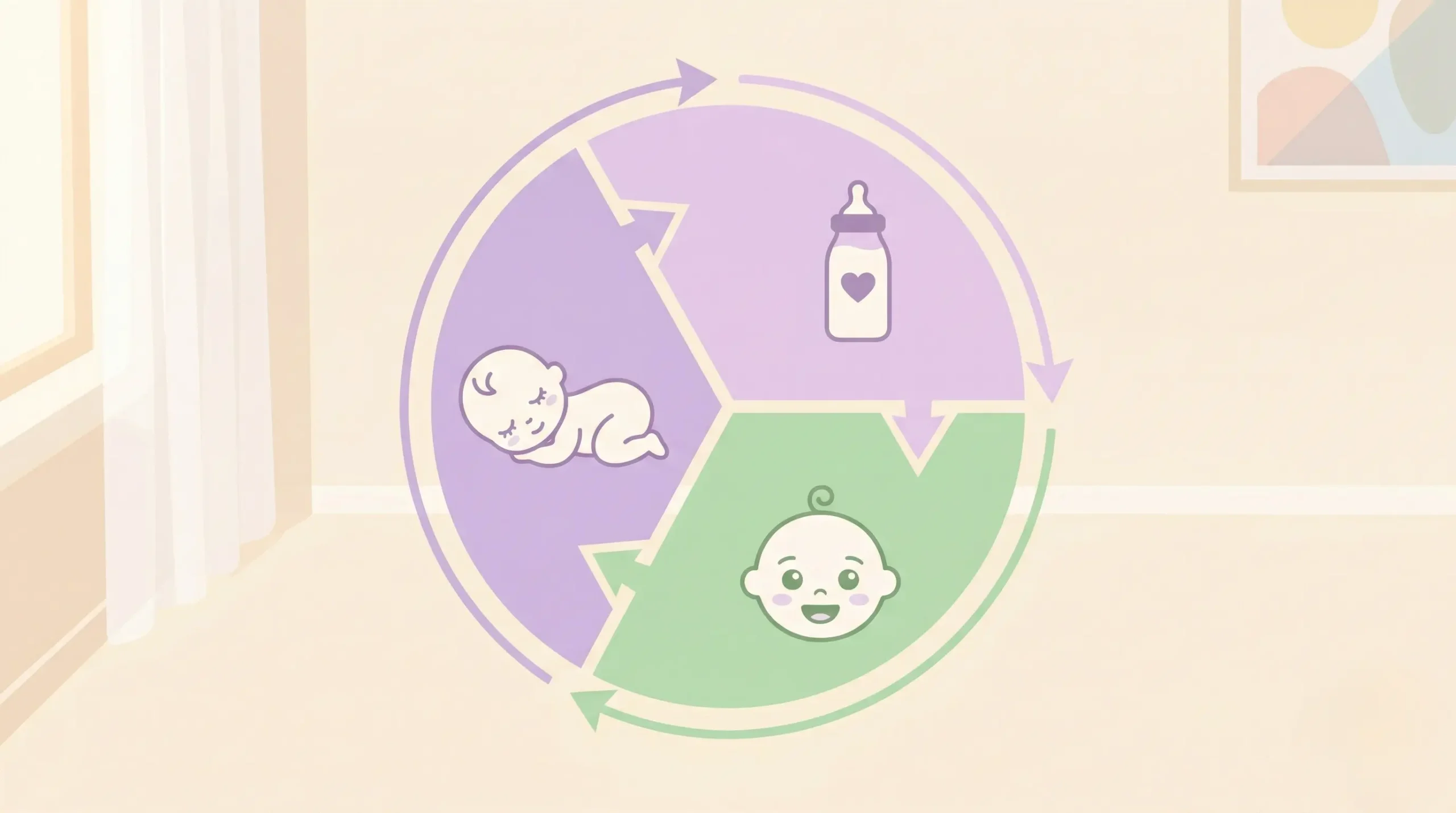
Newborn Wake Windows
The most important number in this guide: newborns can only tolerate 35 to 90 minutes of awake time. In the first two weeks, that window is closer to 35 to 50 minutes. By 6 to 8 weeks, it extends to about 60 to 90 minutes.
| Age | Wake Window | What to Expect |
|---|---|---|
| 0–2 weeks | 35–50 minutes | Baby may fall asleep during feeds |
| 2–4 weeks | 45–60 minutes | Slightly more alert, brief eye contact |
| 4–6 weeks | 50–75 minutes | Starts tracking faces, more social |
| 6–8 weeks | 60–90 minutes | Clearer sleep cues, longer awake stretches |
An overtired newborn shows subtle signs first — looking away, hiccupping, yawning — and dramatic signs quickly after: arching, intense crying, inconsolable fussing. Learning your baby’s sleep cues in the first few weeks saves a lot of stress later.
At around 5 weeks, I thought my son could handle 80 minutes of awake time because he seemed happy and alert. He was cooing, making eye contact — no signs of being tired. But at the 70-minute mark, he went from smiling to screaming in under 5 minutes. No amount of rocking, bouncing, or shushing helped for nearly 45 minutes. After that I set a timer for 60 minutes and started the wind-down process no matter how happy he looked. The cues I was waiting for were already too late.
Day vs. Night Confusion (and How to Fix It)
Many newborns have their days and nights reversed — sleeping long stretches during the day and being wide awake from midnight to 4 AM. This is because the circadian rhythm has not developed yet. You can help it along:
Expose to Natural Light During the Day
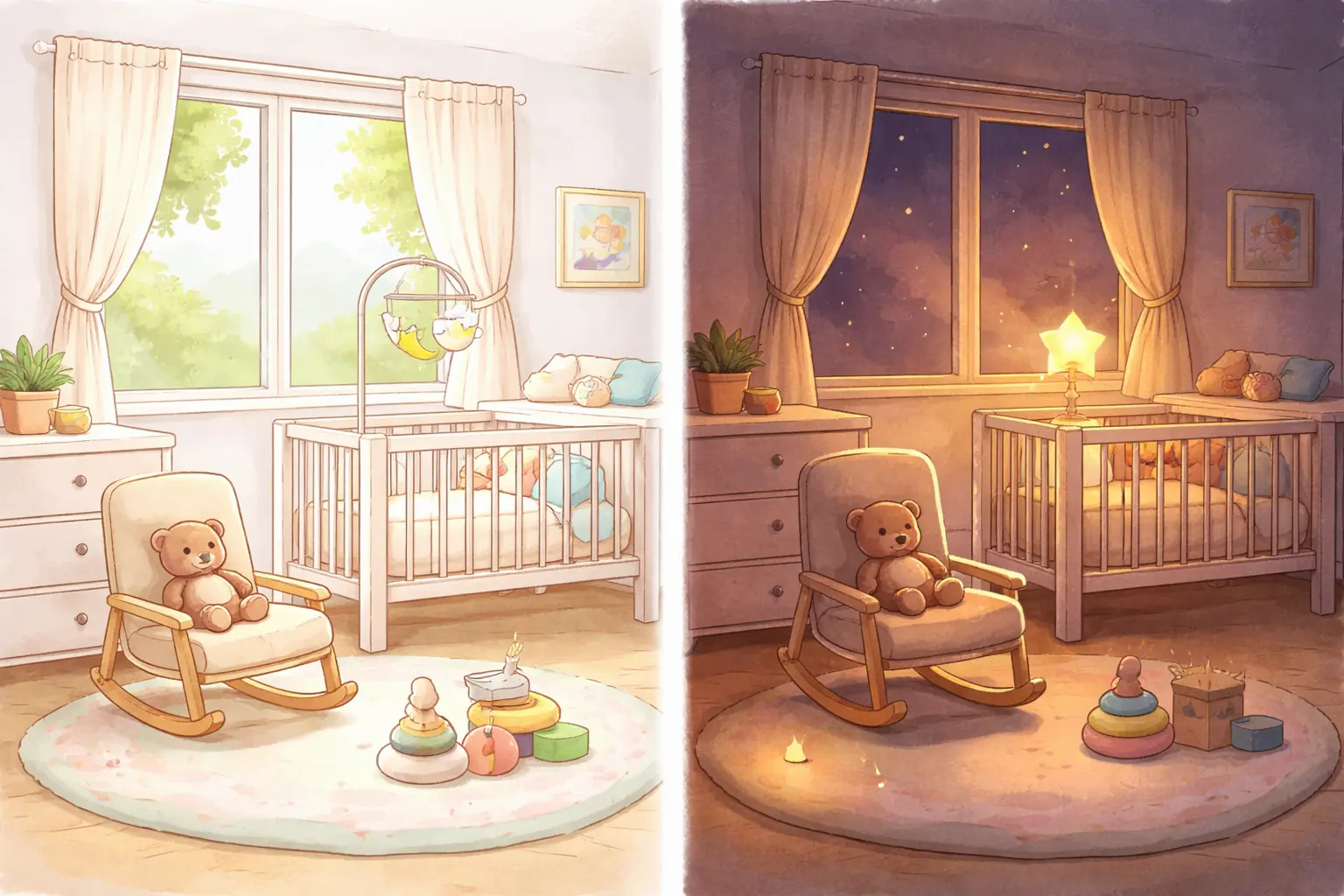
Open curtains. Take the baby outside or near a window during awake periods. Natural light exposure helps calibrate the internal clock. Even 15 to 20 minutes of indirect daylight helps.
Keep Nighttime Boring
When your baby wakes at night for feeds, keep the room dark (use a dim red or amber nightlight if needed). Speak softly or not at all. Change the diaper only if necessary. Feed efficiently and put the baby back down. Do not play, talk enthusiastically, or turn on lights.
Around week 4, my son woke at 2 AM and I made the mistake of turning on the bathroom light with the door open while I changed his diaper. He was wide awake, eyes wide open, cooing and kicking for the next two hours. My husband and I sat in the dark living room taking shifts with a baby who thought it was morning. After that, we taped a small red LED light inside the changing area and never turned on a real light during night feeds again. That one change made a noticeable difference within a few days.
Establish a Mini Routine
Even at 2 weeks old, you can start a simplified bedtime routine: dim lights 30 minutes before the last feed of the evening, change into pajamas (or a sleep sack), feed, and place in the crib. This mini routine begins building the association between these cues and nighttime sleep.
Day–night confusion typically resolves on its own by 6 to 8 weeks. The steps above can speed the process by a week or two.
Safe Sleep Rules for Newborns
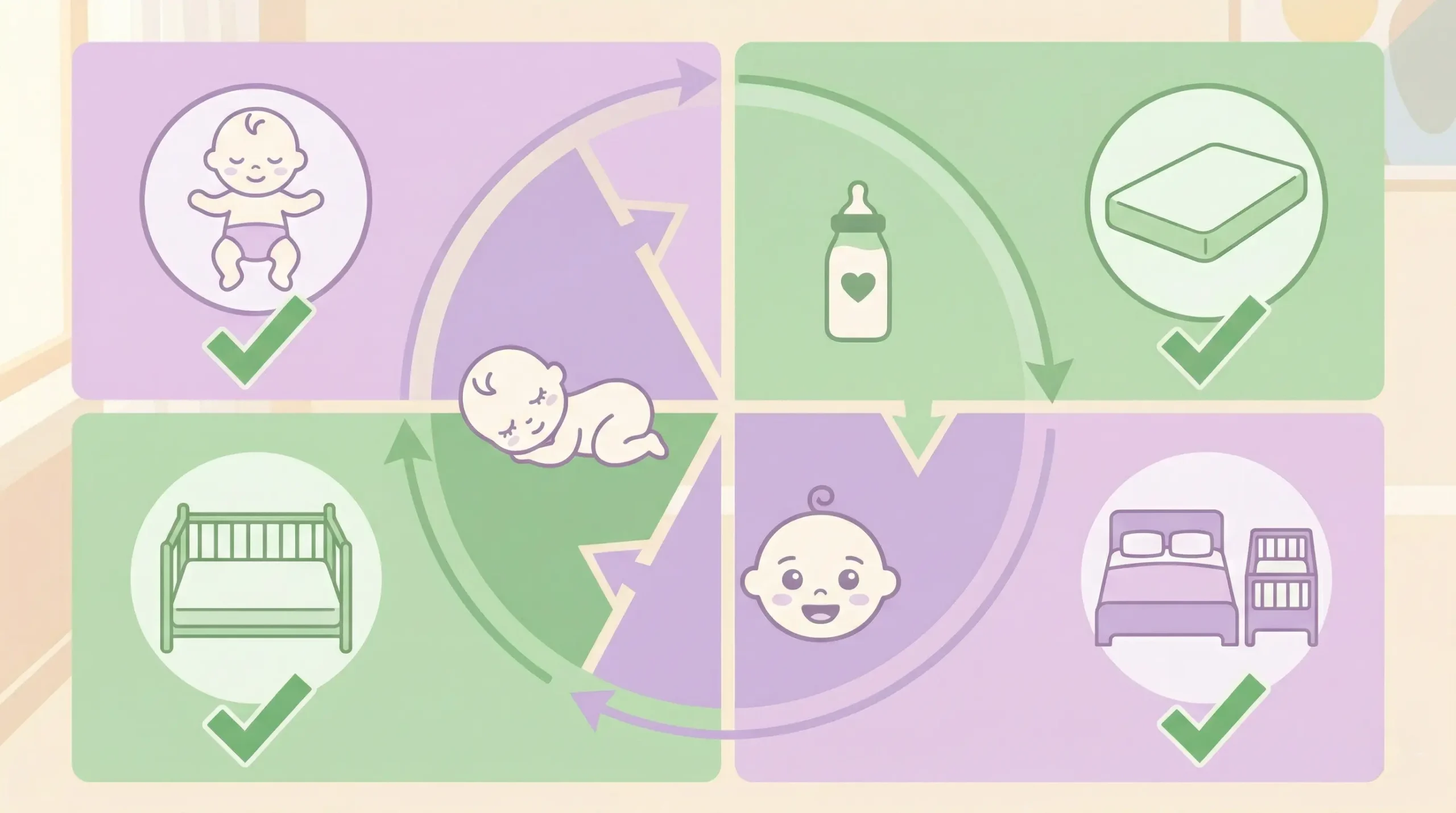
Every conversation about newborn sleep must include safe sleep. According to the American Academy of Pediatrics safe sleep guidelines:
- Always place your baby on their back to sleep — for every sleep, every time.
- Use a firm, flat mattress with a fitted sheet. Nothing else in the crib: no blankets, pillows, bumpers, stuffed animals, or positioners.
- Room-sharing (baby in your room but on their own sleep surface) for at least the first 6 months is recommended.
- Do not bed-share, especially on soft surfaces like couches.
- Keep the room at a comfortable temperature (68 to 72°F) and do not over-bundle.
Swaddling is safe for newborns who are not yet rolling. It reduces the startle reflex and can help with longer sleep stretches.
When Newborn Sleep Gets Easier
Around 6 to 8 weeks, most families notice a shift. Nighttime stretches begin to lengthen. Naps become slightly more predictable. The baby starts showing clearer sleep cues. This is not because you did something magical — it is the circadian rhythm coming online.
By 3 months, you will be ready to think about a more structured schedule.
The newborn phase is about survival and gentle guidance, not rigid scheduling. Feed on demand, watch those tiny wake windows, practice safe sleep, and know that the chaos does get better. Usually sooner than it feels like it will.
Frequently Asked Questions
Not a strict one. Newborns do not have a developed circadian rhythm until around 6 to 8 weeks, so fixed sleep times are not realistic. Instead, focus on following wake windows (35 to 90 minutes of awake time depending on age) and watching for sleep cues. A loose eat–wake–sleep pattern is the closest thing to a schedule in the first 2 months.
In the first 2 weeks, most newborns can only handle 35 to 50 minutes of awake time. By 6 to 8 weeks, this extends to about 60 to 90 minutes. Keeping your baby awake longer than their wake window typically leads to overtiredness and harder settling — not better sleep.
This is called day–night confusion, and it happens because the circadian rhythm has not developed yet. You can help by exposing your baby to natural light during daytime wake periods, keeping nighttime feeds dark and boring, and starting a simple bedtime mini-routine. Most babies sort this out by 6 to 8 weeks.
Many babies begin sleeping one longer stretch of 4 to 5 hours by around 6 weeks. This is not universal — some take longer. The shift happens as the circadian rhythm develops and stomach capacity increases, allowing the baby to go longer between feeds.
Yes, swaddling is considered safe for newborns who are not yet showing signs of rolling. It helps reduce the startle (Moro) reflex, which often wakes babies. Always use a thin blanket or a purpose-made swaddle, and stop swaddling at the first sign of rolling — typically around 3 to 4 months.
This article is for informational purposes only and is not intended to replace professional medical advice, diagnosis, or treatment. If you have any concerns about your baby’s sleep or health, consult your pediatrician. This content is based on AAP and NSF guidelines.